Build the structure
Learn elements, attributes, semantic markup, forms, links, images, page structure, and how websites are organized.
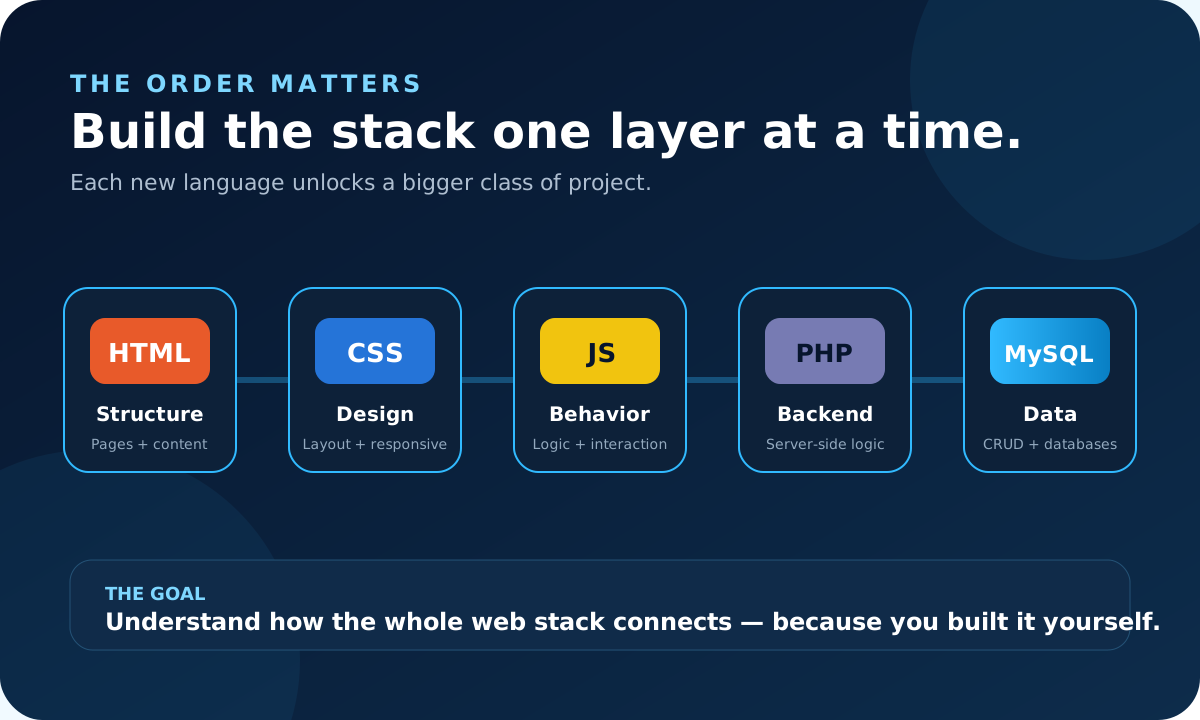
Learn HTML, CSS, vanilla JavaScript, PHP, and MySQL in the order they actually fit together—by building more than 20 projects from scratch.
No fluff. No theory dumps. No endless sandbox exercises. You learn the concept, use it in a real build, and keep moving.

Watching another lecture about variables, selectors, loops, or databases does not automatically turn those concepts into a usable skill. The gap closes when you have to make something work.
Coding Foundations is built around that gap. You learn only what you need, then immediately apply it inside a project where the code has a job to do.
You do not jump into a giant framework and hope it makes sense later. You start with the browser, add behavior, then move into backend logic and databases.
Learn elements, attributes, semantic markup, forms, links, images, page structure, and how websites are organized.
Style layouts, master responsive design, work with Flexbox and Grid, and turn plain markup into polished pages.
Learn programming fundamentals through interactive apps, CRUD-style interfaces, local storage, APIs, forms, modals, and more.
Handle forms, validation, includes, sessions, authentication, application logic, and dynamic pages.
Connect your PHP applications to a real database and build create, read, update, and delete functionality.
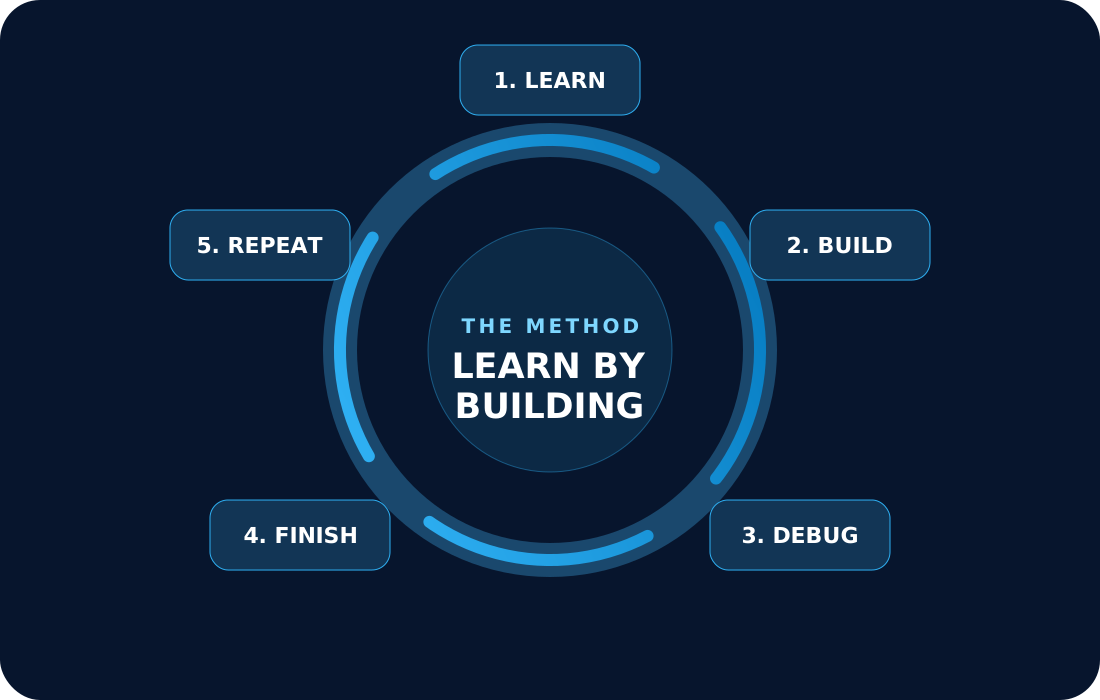
You keep seeing the same fundamentals in new contexts until the patterns start to feel natural. That is how you stop depending on step-by-step hand holding.
The point is not the project itself. The point is learning how structure, styling, logic, backend code, and data work together so you can build your own ideas later.
That moment where your layout breaks, your function returns the wrong value, or your database query does not work? That is not a detour from learning. That is the learning.
Learn the concept without burying it under a giant lecture.
Use it right away so the idea becomes connected to a real result.
See the same fundamentals again with different requirements and problems.
The course grows with you. Each phase adds another layer while reusing the skills you already learned.
Start with the language every website is built on and learn how real pages are structured.
Turn raw HTML into responsive websites that look intentional on desktop, tablet, and mobile.
Learn vanilla JavaScript by making the browser do useful things—not by memorizing syntax in isolation.
Move beyond front-end pages and start creating server-side functionality and dynamic applications.
Bring the entire stack together by storing real data and building a multi-stage content management system.
Freelancing. AI-assisted development. SaaS. Client sites. Your own business. The tools will change. These fundamentals keep paying you back.
You do not need to hand-code every project forever. But you do need enough foundation to recognize what the code is doing, change it on purpose, debug bad output, and know when the machine is confidently wrong.
This course gives you that base. Learn the fundamentals manually, then bring AI into your workflow from a position of understanding instead of dependence.
You will still look things up. You will still get stuck. That is normal. The difference is that you will understand the moving parts well enough to know what to try next.
Every project feels like starting from zero because the concepts live in separate mental boxes.
Structure. Style. Behavior. Backend. Data. You can see the layers and attack them one at a time.
No. The curriculum starts with HTML and builds upward from there. It is designed to give beginners a clear sequence instead of dropping them into a giant application on day one.
HTML, CSS, vanilla JavaScript, PHP, and MySQL. You learn them in that order so each layer makes sense when it is introduced.
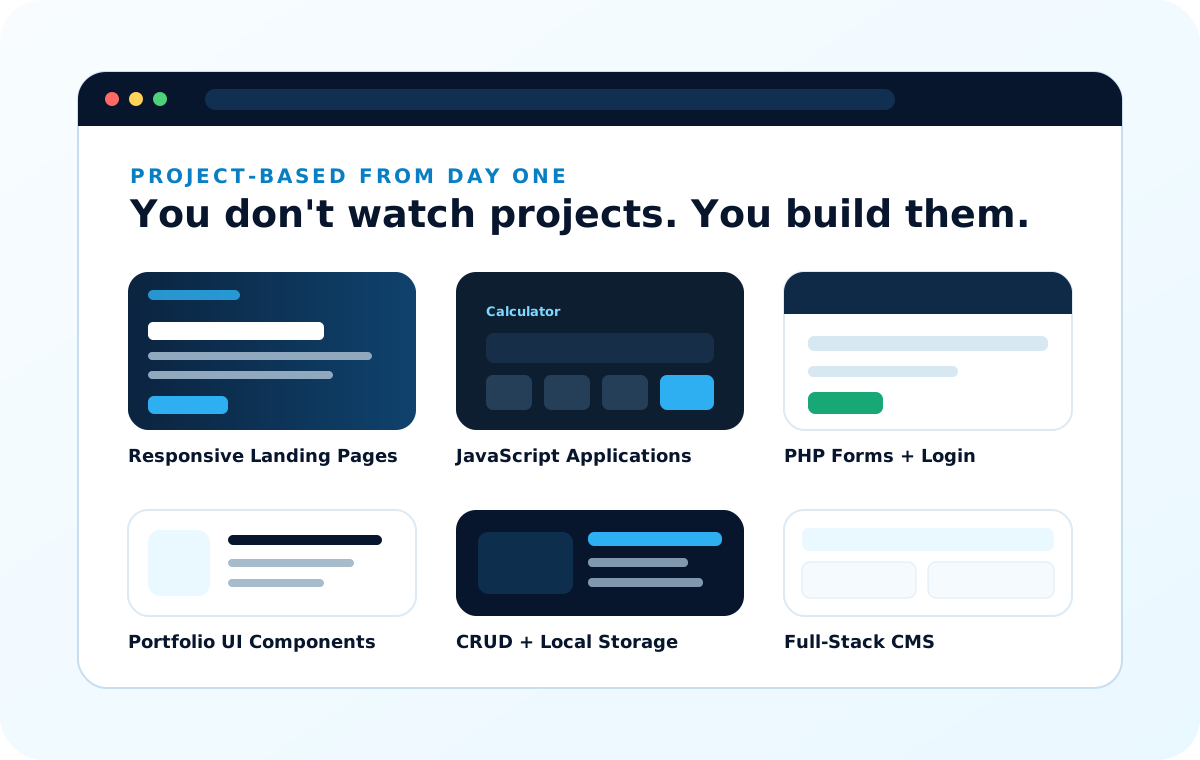
Yes. The course is built around 20+ projects, including responsive pages, JavaScript applications, PHP authentication projects, a full-stack todo application, and a multi-stage CMS. The goal is to learn by building, not to park you in endless theory lessons.
The foundations are intentionally framework-free. You learn HTML, CSS, vanilla JavaScript, PHP, and MySQL so you understand the technologies frameworks abstract away.
They give you a direct, practical path into server-side development, authentication, forms, databases, CRUD applications, content systems, and full-stack website functionality without adding unnecessary tooling first.
Yes. AI can generate code quickly, but foundations let you understand, inspect, edit, debug, and direct that output. The faster AI gets, the more useful it is to know what good code is supposed to do.
Yes. Work through the curriculum in order at a pace that fits your schedule. The important part is to code along and complete the projects instead of racing through the videos.
50+ hours. 20+ projects. Five core technologies. One straightforward curriculum built around the only thing that makes coding stick: actually doing it.
Secure checkout and course access are handled through Teachable.